
Top Tips for Selecting the Right Pallet Racking System: A
Comprehensive Guide
Understanding Your Storage Needs and Inventory
Requirements
Before choosing a pallet racking system, it's crucial to assess your storage needs and inventory requirements. Consider the types of products you store, their sizes, and how frequently they are accessed. This understanding will guide you in selecting a system that maximizes efficiency and minimizes downtime.
 Additionally, categorizing your
inventory based on factors such as turnover rates can help you determine the
best racking solution. For example, fast-moving items might benefit from a more
accessible racking system, whereas slower-moving items can be stored in less
accessible areas.
Additionally, categorizing your
inventory based on factors such as turnover rates can help you determine the
best racking solution. For example, fast-moving items might benefit from a more
accessible racking system, whereas slower-moving items can be stored in less
accessible areas.
Exploring Different Types of Pallet Racking Systems
There are several types of pallet racking systems available, each designed to accommodate different storage needs. Common types include selective racking, drive-in racking, and cantilever racking. Selective racking is ideal for easy access to all pallets, while drive-in racking maximizes space by allowing forklifts to enter the racking structure for storage.
Understanding the unique benefits and limitations of each type will help you select the right system for your warehouse. Consider factors such as the type of products, the volume of inventory, and the required access frequency when exploring these options.
Evaluating Warehouse Space and Layout Considerations
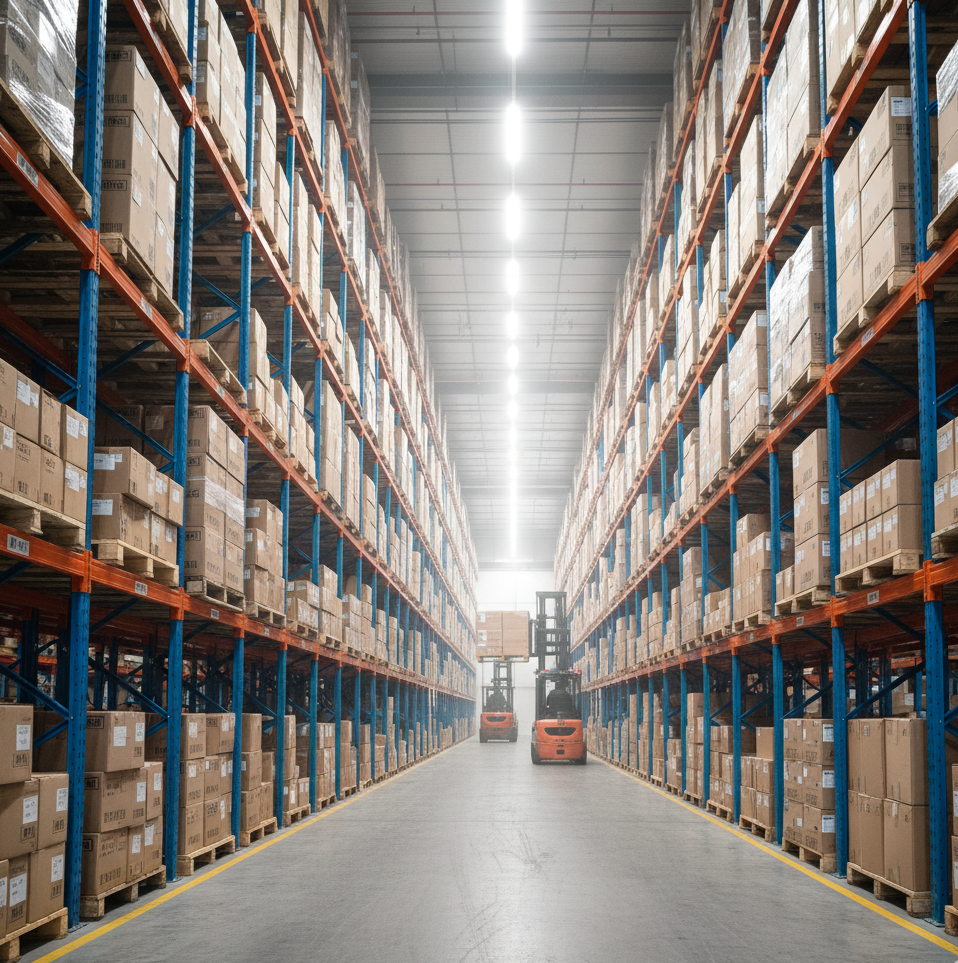
The layout of your warehouse plays a significant role in the effectiveness of your pallet racking system. Analyze the dimensions of your warehouse, including ceiling height and aisle width, to determine the most efficient racking configuration. A well-planned layout can enhance workflow and reduce the time spent locating and retrieving items.
Furthermore, consider the flow of goods in your warehouse. Designing your racking system to facilitate easy access and movement can lead to improved operational efficiency. Use software or consult with a warehouse design expert to optimize your space effectively.
Assessing Load Capacity and Safety Standards
When selecting a pallet racking system, it's essential to assess the load capacity required for your inventory. Each racking system has specific load limits, and exceeding these can lead to safety hazards and equipment failures. Ensure that the racking system you choose is rated for the weight and type of items you plan to store.
Additionally, familiarize yourself with local safety standards and regulations concerning warehouse storage. Compliance with these regulations not only ensures the safety of your employees but also protects your investment in the racking system.
Considering Future Growth and Scalability
As your business grows, so too will your storage needs. It's important to select a pallet racking system that allows for future expansion and scalability. Modular systems, for instance, can be easily adjusted or expanded as your inventory grows, ensuring you don't outgrow your storage solution too quickly.
Planning for scalability includes considering potential
changes in inventory types and volumes. A flexible racking system will
accommodate future changes without requiring a complete overhaul of your
warehouse layout.